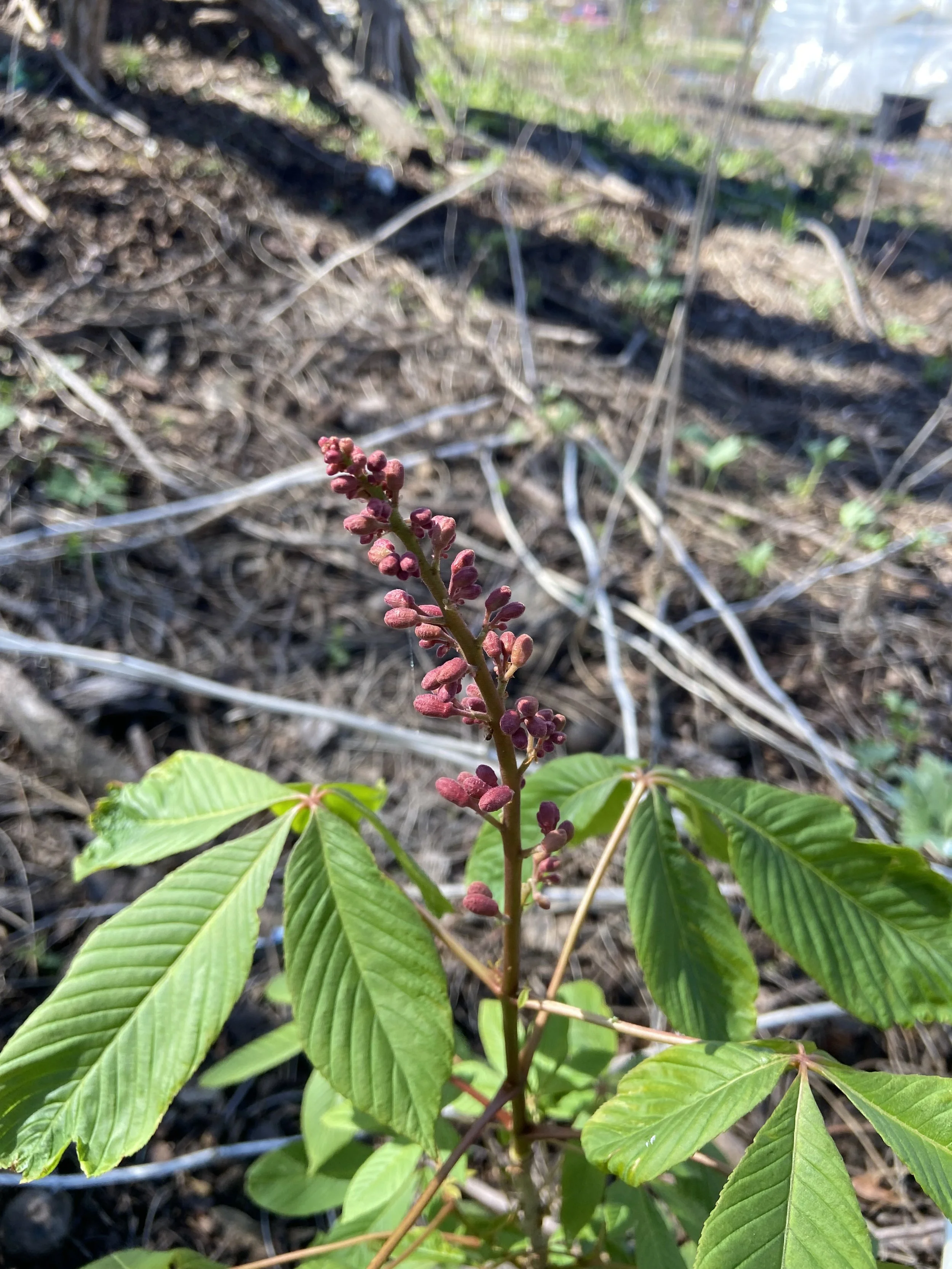
 Image 1 of 1
Type:
Native Habitat:
Light: Full sun to part shade
Soil: Medium to wet
Growth: 12’ -15’ tall and wide small tree
Bloom: Red bloom from April-May
Spread:
Faunal interaction:
Additional info: Excellent ornamental tree. Does best if protected from afternoon sun. This is one of the first trees to leaf out early in the spring, but tends to lose its leaves early in the fall or late summer. Red flowers attract hummingbirds and bees. The Buckeye nut is eaten by squirrels, but it toxic to humans. The nuts are sometimes carried around for good luck. The crushed and powered seeds were used to catch fish, by pouring the crushed seeds into a pool of water with the fish would float to the surface and could be easily graded. The roots can be used to make a soap substitute. The bark is said to have medicinal properties.